|
|||||||||||||
|
The Greek rebellion of 1770 is associated with the Turko-Russian war (1768-74), and is considered a prelude of the Greek Revolution in 1821.
Catherine IIopposed the Ottoman Empire and made clear Russian demands: control over the north Black Sea coastline and the Aegean passage. Following the steps of Peter the Great, she led the crusade of the Orthodox Christian Balkans against Islamic doctrine. However, Russian sermons found fertile ground in the Greek lands as the Sultan's Empire was withering away. The regional administration was paralyzed; its administration was corrupt and suffered from excessive taxation especially after the tax auction. Thieves, Greeks and Albanians ravaged Greece, while inhabitants suffered from unbearable debts. Oracles concerning the Fall of the Ottoman Empire made their appearance once again in a climate of generalized unease.
|
|
|||||||||||
|
|
|
|
||||||||||
tense relations: |
The brothers Grigory, Aleksey and Fyodor Orlov took the initiative in the Greek rebellion. The naval expedition in the Mediterranean was probably inspired by Georgios Papazolis from Siatisa-Macedonia, who also acted as an agent in Greece. The Russian agents had already organized their tactics in Greece area when the Orlov brothers arrived in Italy to start negotiations with the Maniates. The revolution was prepared in an enthusiastic climate. In February 1770 a small squadron of Russian ships under the command of Fyodor Orlov sailed into the port of Vitilos. On seeing the ships the Maniates expressed great enthusiasm, which was moderated when they realized the size of the 'fleet'. The relationship between the Russians and the Greeks was already tense.
Greeks had lost faith in the Russians and refused to enter their armed forces, feeling that their intervention was simply an unplanned diversionary act. The number of Russian forces was small and the coordination between the Christian populations was non-existent. |
|
|||||||||||
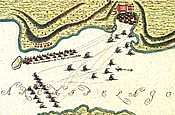
However, the Maniates together with some Peloponnesians and Russians managed to run the Turks out of Kalamata, Mystras and other regions. Bad organization, insufficient material aid and unsuccessful ventures such as the siege of Koroni, halted the Greek rebellion. It was now obvious that it was all a misunderstanding; the Russians visualized a victory with extensive Greek support, and vice versa. Eventually, when the Russians realized the unfortunate outcome of the rebellion, they abandoned the fortress of Navarino, leaving the Greeks in the hands of the relentless Turks; the Greeks won the Battle (5-7 July 1770) in the strait between Chios and Tsesme.
|
|
||||||||||||