|
|
The end of the Venetian-Turkish war and Karlowitz treaty in 1669 put an end to Venetian ambitions in the eastern Medittereanean and the Ottoman Empire. Russia and Austria took over; Russia would play a crucial role in the future, being an Orthodox Empire. The interference of Russia in Ottoman issues began under the reign of Peter II. Its foreign policy in the South involved the control of the northern Black Sea coast and free navigation in the Meditteranean. Such efforts aroused hostile feelings between Russia and the Ottoman Empire. However, Orthodox belief was often used as pretext for the Russian involvement in Ottoman state affairs.
|
|
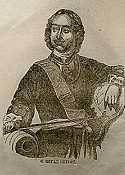
Peter the Great,
Russian tsar
|
|
|
Beyond the involvement at state and diplomatic level,
the shared and glorious past of the Balkan Orthodox and Russia allowed
Peter to approach the inhabitants of the Balkans and cultivate the image
of liberator. His agents travelled in the Balkans and the Ionian islands
offering presents and the portrait of the tsar to the Christians and ecclesiastical
foundations. The portrait bore the inscription, Petrus primus Russograecorum
Monarcha (Peter the first Monarch of the Russian-Greeks). People living
in remote areas often looked up to Peter and both Greeks and Balkan Christians
were receptive to Russian influence. Before long, legends and prophecies
related to the Russians and the Tsar began to spread. The most popular
refered to a 'golden genre' (blonde genre), meaning the Russians, who
would destroy the Ottoman Empire. Peter urged the Christians to revolt
in the eve of the war of 1711. In 1711, on Theophany Day, he declared
that Russia would no longer turn its back on the grief of the Balkan Christians.
Nevertheless, he did not have a liberation plan for the Christians. He
counted on their revolt and the cooperation of the hospodars of the Danube
Principalities in his fights against the Turks. The Balkan Christians,
however, were not willing to take any risks before being convinced of
the success of the Russian enterprises. Peter's failure disappointed the
Greeks; but their faith in Russia stayed alive.
|
|
|

