|
|
By the 18th century, most people's image of the jannissary did not correspond to that of the well trained, loyal warrior of the beginning of the Ottoman Empire. When the children's levy was officially abolished in the mid-17th century, the jannissaries was already showing signs of decline. The sheer size and expenditure of this class was an unsupportable burden for the state. As the 18th century was closing, people from all over the Empire claimed similar rights and privileges, sometimes using false documents. In the attempt to absorb them, the central administration granted them the right to enforce the law outside the Palace; such was the case of the Guild of Constantinople. Still, the jannissaries were a nuisance to the city; they blackmailed and terrorized artisans, caused problems in the markets and with the inhabitants of central quarters. Their power was limited when the Porte offered similar privileges to rural guilds.
|
|
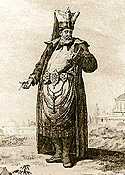
Janissary, end of the 18th century.
|
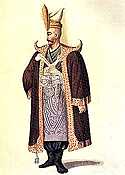
Janissary
|
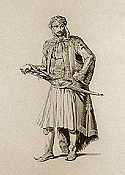
Janissary from Ioannina, 1811
|
| |
This course of events, however, brought severe problems to the south Balkan area and Asia Minor. When the janissaries realised that small towns could not provide an income similar to that to which they had been accustomed, they formed gangs. The gangs and the dais (group leaders) terrorised the towns and the villages demanding taxes and killing anyone who resisted. Some regions (Thessaloniki, southern Serbia) were ravaged by gangs which controlled entire regions.
|
|
| | By the start of the 18th century, other leading groups were being suppressed by the jannissaries; excessive powers. Eminent Muslim toparchs created armies to resist the jannisary gangs and armed Christian groups, the armatolos and powerful prokritoi rallied together against them. During the second half of the 18th century, relentless riots occured since local power was divided among Muslims, janissaries, Christians, proestoi and armatolos. Riots often ended in alliances which nevertheless caused more problems than they solved. Subsequently, the jannisaries soon became associated with cruelty and oppression. Their ferocity remained in the memory and language of the Balkan populations decades after the outbreak of anti-Ottoman revolutions and the establishment of ethnic nations.
|
|
|
