|
||||||||||||||
The Napoleonic wars (1796-1814):
this was a period of upheaval and conflict that extended into southeastern Europe and northern Africa. |
Twenty years before the outbreak of the Greek Revolution, there was frequent contact between people working for the separation of the Balkan nations from the Ottoman Empire. New circumstances, such as the triumph of the rebels in France, the Napoleonic wars and the revolt of the Serbs in 1804 kept the revolutionary spirit alive in Greece and the Danube basin. After the end of the Russian-Turkish wars and the ceasefire in Serbia, secret meetings among the separatist societies became commonplace; the early 19th century saw the growth of societies such as the Ellinoglosson Ksenodochion, Filomousos Etaireia (Athens) and Philiki Hetaireia. |
|
||||||||||||
|
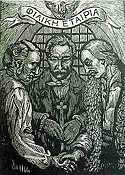
Philiki Hetaireia was the most important society
in southern Balkans, the Aegean and Asia Minor to fight against Ottoman
oppression. It was founded in Odessa in 1814 by three members of the Greek
diaspora, Skoufas,Tsakalof and Ksanthos. The society survived seven years
and brought together Christians from different origins and financial backgrounds
by adopting masonic methods and ceremonies. Its revolutionary declarations
were still vague, and there was no manifesto. Nevertheless, the society
incorporated various groups within it. Merchants, professionals, bankers,
clergymen, armed groups and administrators worked together for a common
purpose. The Hetaireia extended its activities to an area stretching from
Constantinople and the major European cities to the Pelopponese, the Ionian
Sea, Macedonia and the south coast of Asia Minor. It was a movement with
innate organizational problems but represented nonetheless an important
development. For the first time different groups worked together for the
separation of ethnic groups from the body of the Ottoman Empire. Communication
within the Sultan's state had been difficult and Philiki Hetaireia managed
to unite those whose cooperation would be crucial in the near future.
|
||||||||||||||
|
|
|
||||||||||||