|
||||||||||||||
|
In the 18th century the western world was going through a period of drastic changes, which showed threatening signs of decline for the Empire's traditional values. Wars were no longer won on the battlefield. Throughout this period the Empire was subject to invasions whose outcome depended on High Gate diplomats and not on the disorganized
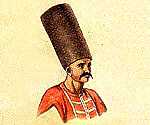
askeri or the marine. High ranking army officers had lost their power, having suffered from the pressures of corruption within the palace and the decadence of the Muslim provincial aristocracy. The janissaries, the sultan's loyal warriors, fled to distant Ottoman districts realizing that their military competence and devotion to the Sultan could no longer provide for them. |
|
||||||||||||
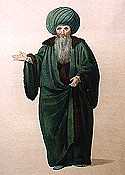
A similar situation prevailed among the religious leaders, the second most important power in the Empire. The successors of Islam's medieval tradition, the religious leaders could not handle a changing world. During the 18th century the ulema was gradually organized. Religious education lost its previous glory. The thinkers of Islam, judging from the decadence of their group, were unable to check the generalized decay. |
Ulema: educated theologians and interpreters of Muslim law. |
|||||||||||||
As the 19th century drew to a close, the groups which previously supported the Empire had chosen to remain in the capital and become involved with the bureuaucratic class, while others fled to the provinces, demanding power from the hands of autonomous Muslim toparchs. |
|
|
||||||||||||