 |

For centuries the Ottoman Empire had been using its Christian and Hebrew citizens for its diplomatic and administrative needs, such as Alexander Mavrokordatos, the Sultan's confidant, and the sovereigns of Moldavia and Wallachia.
After the foundation of the Greek state and its efforts to become a national centre, this policy of the Kapi created a paradox. In many crucial phases of the Greek-Ottoman relationship, it was Greek Orthodox people or Greeks as representatives of the Kapi who confronted Greek authorities and delegations, or Greek Orthodox populations in the East.
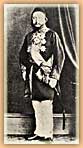
In 1840, Kostakis Mousouros was appointed ambassador to the Kapi. But perhaps because of his Greek descent, he proved to be a tough representative of the Kapi, especially when it came to the issue of the nationality of Greeks who came from Ottoman regions; this bewildered the people who received him.
The following incident with Otto is typical of this climate. On 11th January 1847, Mousouros refused to visa the passport of the king's adjutant, Tsamis Karatasos, because he had participated in the Macedonia movement. Two days later, at the palace ball, the young monarch insulted the ambassador of the Kapi by saying in French: 'Sir, I believe that the King of Greece deserved more respect' and turned his face away.
Following the suggestion of Ed Lyons, the English ambassador, Mousouros left the reception while the minister of foreign affairs of the Kapi covered for his ambassador and demanded, through an ultimatum, a humble apology from the Greek prime minister. As the Greek government rejected this, Mousouros left Piraeus on 3rd February and on 30th March Emmanuel Argyropoulos was called back to the Kapi as Greek ambassador.
These developments caused a freeze between the consular authorities of Greece within the Ottoman Empire and the Greek citizens living there got worried; the muhossil of Constantinople, and not one of the representatives of the Great Powers, as the Greek side wanted, undertook the obligation of protecting them.
In August 1847, the Kapi proceeded to break off its formal relations with the Greek state and withdrew the credentials of Greek consuls. The difficult situation the Greek state was in, pressure from the Powers and the change in the internal political balance, made Greece become more conciliatory.
Following a letter of apology from the Greek government to the Ottoman Empire's ministry of Foreign Affairs, Mousouros returned to Athens on 8th February 1848.
This episode and the ones that followed it became known as Mοusourika.
But a new crisis in the relations of the two countries broke out due to an attempt to murder Mousouros on 23rd April 1848, and then because of the issue of the perpetrator's extradition.
At the end of the 1840s, Greek-Ottoman relations, which were already tense, suffered their most crucial moments over a Greek Orthodox citizen of the Kapi.
|
 |


