 |

The Greek Orthodox subjects of the Sultan were not all socially and politically marginalized slaves. On the contrary, in many cases they were given diplomatic posts and formed an intermediary link between those subjects who shared their faith and the Kapi. Such a case was the Karatheodoris family, which linked its name with some of the more dramatic and paradoxical pages of Greek-Ottoman history.
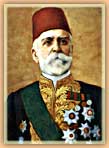
A characteristic personality from this family was Alexander Karatheodoris Pasha. He was born in Constantinople in 1833, where he died in 1906. He studied law and mathematics in Paris and followed a career at the Ottoman Ministry of Foreign Affairs. He participated in negotiations with the rebelled Cretans in 1867-68 and served as ambassador in Italy, undersecretary and minister of Foreign Affairs at the Kapi. At the Congress of Berlin in 1878, he headed the Ottoman diplomatic delegation. This is where a paradox appeared: at the same congress, the Greek delegation, under the minister of Foreign Affairs, Theodore Diligiannis, seemed to represent - or at least defend - the interests of the Greeks in Macedonia and Thrace. That is, the Greek minister defended a population group to which his most important diplomatic opponent, the Ottoman delegate, clearly belonged. History brought him to the same difficult and anomalous position twice more; the first occasion was when he was sovereign of Samos between 1885 to 1894, a position held by Christian Ottoman citizens such as Stephanos Vogorides, Ioannis Konemenos, Pavlos Mousouros, Konstantinos Photiades and Konstantinos Adosides. In spite of his successful career in many sectors, Karatheodoris caused anger among the people of Samos when he chose violent means to reinforce the presence of Ottoman soldiers on the island, in order to deal with complaints against his policy. After several peasants had died during the fighting, Karatheodoris was forced to abandon the sovereign's post. The second time, a crucial point in his career was the post of General Commandant in Crete, in 1895. The island, which was in constant turmoil, had been previously governed by Costas Adosides, Ioannis Photiades and K. Anthopoulos. Karatheodoris had served in the same post for a few months, after the Halepa Pact; he was appointed anew in Crete in order to calm revolutionary tendencies. He initially seemed to succeed in his mission, but the violent reaction of the Turco-Cretans, the climate of turmoil this caused and mostly the Cretans' insistence on his separatist and uniting plans, led him to hasty reactions. He broke the Assembly up when he asked for the reinstatement of the Halepa Chart (28th June 1895) and ordered for the Post-Political Reform Committee to be arrested after the submission of Koundouros's note in September 1895.
Karatheodoris was soon replaced, in March 1896, by Turchan-Pasha and was restricted to the duties of senior translator at the palace. His personal failure shows the utopia of a political identity which ignores national parameters. The 19th century was the century when conformity to the law of the state was called to serve national ideas and the ideal of national state which in this case, for the Greek Orthodox people of the Empire, was incarnated by Greece.
|
 |


