 |

In foreign policy, apart from specific institutions and competent people, there are also other individuals or groups who take action and sometimes play an important role, who shape situations or apply the ideas and strategies of others.
The physiognomy of 19th century warriors is very interesting: apart from regular military forces, there were armed forces which neither acted nor were in the framework of institutions and legitimacy. Many of the armed rebels of Epirus and Thessaly were members of bandit groups who sojourned on the Greek-Ottoman border. A large proportion of them participated with their captains at the gathering of Radovitsio in 1853 and at the subsequent conflicts with the Ottomans, which acquired a national perspective after the proclamation of Radovitsio on 15th January 1854.
After the 1854 revolts, the bandits did not stop staffing the 'volunteer' groups that took part in liberation movements, many times with a negative impact. Accusations over the transportation of remunerated volunteers to Crete in 1867 are typical. Many bandits participated in the 1878 revolts in Thessaly and Macedonia.
Many accusations have been heard and written of their character and attitude. In fact, diplomatic correspondence, discussions in Parliament, attacks by the press, even the written response from Leonidas Voulgaris, recruiting captain, to Diligiannis, prime minister, were not unaffected.
Of course, the armed marginal forces of the countryside, despite their illegal character, continued to be recruited, especially in order to invade Macedonian territory, because of their availability and familiarity with the practice of guerilla warfare. Volunteer groups from Greece, as well as from the diaspora, participated in all the revolts of the 19th century. Many volunteers from the Ionian Islands, which were under English rule, were present in Epirus in 1854 and many volunteers from the Greek Legion were sent to Sebastopol in 1855.
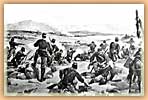
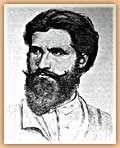
Many volunteers participated in the Cretan revolts of 1867, a thousand of whom were incorporated in Demetrios Petropoulakis's force, which did not have any success. Greek volunteer forces also took action in Thessaly in 1878 as well, and later in Macedonia and Crete in 1896-97. Apart from Greeks, foreign volunteers, mostly Italians, frequently participated in revolts too. These groups were connected to the Garibaldi movement, but also to the greater revolutionary movement in Europe. Volunteers who were supporters of Garibaldi fought in Crete in 1867 and 1896-97. The Italian-Greek Legion, with a core made up of Garibaldi supporters and Greek volunteers, invaded Thessaly in 1867, while Garibaldi supporters volunteered to fight by the side of Amilcare Cipriani, the anarchist, and the Greek Army in 1897.
The Garibaldi supporters and other philhellene volunteers belonged to a category of ideological warriors of the 19th century, who, in many cases, were rebels for life. They were frequently surprised and disillusioned by the crude reality of battle and the complex structure of problems in the Balkan peninsula. Similar groups of young volunteers were formed in the bosom of the University or Student Phalanx. The Phalanx was founded in 1862, broken up in 1864 and re-established in 1873. A military student force participated in battles in Thessaly in 1878. At the same time, other student volunteer groups took action, particularly in 1896-97, when the National Committee attributed to intellectuals a national role.
Many times, officers of the Greek army who quit their posts headed the volunteer groups, and then returned to the services when the revolts were over. The act of volunteering gave the Greek liberation movement the opportunity to take action in Ottoman areas, whereas the Greek state did not have to take part directly in war, and the developments of 1897 are easily understood.
|
 |


