 |

In mid-19th century currants were one of the main agricultural products and major exports of Greece. In the Northern and North Eastern Peloponnese currant cultivation assumed the dimensions of a monoculture. The factors that contributed to this development were the favourable climatic conditions of the area, smallholding, which was established by the agrarian reforms of 1871, and the increased demand for currants abroad, which afforded significant returns for producers and those involved in their trade. The lion's share of the currant production was absorbed by England. Greek currant exports soared after a chance event, the phylloxera epidemic that attacked French vines in the 1870s. The recovery of French vines reduced the absorption of Greek production abroad and contributed to the currant crisis at the end of the century.
Table 1.
| Currant: cultivated area and production |
| Years |
Α
Cultivated area
(1000 hectares) |
Β
Production
(1000 kilolitres) |
Percentage increase |
| Α |
Β |
| 1830 |
3.8 |
21170 |
- |
- |
| 1845 |
7.8 |
40995 |
51% |
48% |
| 1851 |
17.2 |
85105 |
55% |
52% |
| 1860 |
22.0 |
109288 |
22% |
22% |
| 1867 |
28.0 |
137613 |
21% |
20% |
| 1878 |
43.5 |
211435 |
36% |
35% |
| 1888 |
62.0 |
327499 |
30% |
35% |
| 1900 |
70.0 |
100000 |
- |
- |
| 1911 |
60.0 |
334001 |
- |
- |
Table 2.
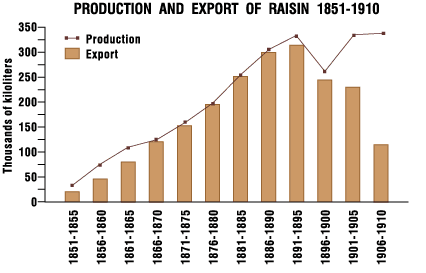
The tables are in: Pizanias, P. Economiki istoria tis ellinikis stafidas 1851-1912. Paragogi, diethnis agora, diamorphosi timon, crisi, Athens, Idryma Erevnas kai Paideias tis Emporikis Trapezas tis Ellados, 1988, pp. 31 and 55
|
 |


