 |

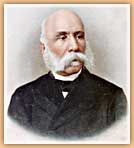
The direction the Trikoupian political programme took, at least as far as economic life was concerned, was pursued without regard to the implications it would have on the daily lives of the people and particularly of lower-income citizens. Among these - the ones most seriously affected by the policies of Ch. Trikoupis - discontent started to accumulate and protests were organized. This trend found its political expression in Theodoros Deligiannis, who from 1883 onwards emerged as the main political opponent of Trikoupis. The approach of Deligiannis as regards the state's economic affairs observed a different politico-economic model. It was based on German experience and ascribed to the state the leading role not only in the political but also in the economic field. This approach was accompanied by harsh opposition tactics and battle cries such as 'down with the taxes'. Hence, the alternative economic proposal made by Deligiannis limited itself to the tenacious rejection of the changes effected by the Trikoupis administration. And in fact, the only measures he actually implemented as Prime Minister were to abolish the taxation bills passed by Trikoupis. His political rhetoric expressed the views of the armies of city dwellers who lived off the state paycheque, the public servants, who were alarmed when the Trikoupis administration voted in bills requiring that they produce evidence of their actual qualifications. He also held powerful sway among traditional farmers living in the countryside who, after the Agrarian Reform of 1871, acquired the mentality of smallholders and temporarily enjoyed the profits of the currant exports. To these groups, the new entrepreneurial strata so to speak, the launching of modern-type economic activities like the stock exchange, international markets, guarantees required for bank loans and expropriations, seemed at the end of the day positively dangerous. These practices afforded to the 'chrysocantharoi' (gold-bugs) or 'caviarohanoi' (caviar-dupes), as persons involved in them came to be called (the epithets were also used for their political spokesman Ch. Trikoupis), the opportunity to engage in inordinately profitable speculations at the expense of small investors. These imputations were not far from the reality as the results of the speculations during the Lavrio events showed. And after all, Deligiannis in his programme did nothing less than voice the fears and discontent of those who suffered the consequences of the Trikoupis programme and the changes the latter sought to bring to the economy and the public life of the country in general. It is these changes that Deligiannis, whose speeches abounded with slogans against taxation, fought against. His slogans and his polemical rhetoric in questions of foreign policy made him extremely popular, even if as prime minister he proved extremely irresolute in handling the Eastern Rumelia crisis.
|
 |


