 |

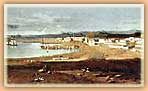
The area of Lavrio had been known since ancient times for its significant mineral deposits. In the 19th century silveride lead, zinc and iron ore were mined there. Lavrio also had a quantity of surface deposits (outcrops). In 1864 the Serpieri-Roux Company acquired the right to mine the area. The contract was not clear however as to whether the company would be allowed to exploit the outcrops too. Hence their exploitation of these deposits as well provoked serious reactions on the part of the opposition, especially of Epameinondas Deligiorgis, and the press. The issue had been blown out of proportion and public opinion was left with the impression that the profits from this practice would be enough to cover the deficit in the state budget as well as obligations arising from the servicing of the loans.
In May 1871, when Koumoundouros was in power, a law was enacted specifying that surface deposits belonged to the Greek state and could not as a consequence be exploited without a relevant permit. The Serpieri-Roux Company did not accept the arrangement, which moreover was to be applied retroactively. True to the standard practice of foreign citizens who came across problems with the Greek state, it did not address itself to the Greek authorities but to the embassies of France and Italy. The issue assumed even larger proportions and led the government to abdicate.
King George gave the mandate to Deligiorgis, whom he asked to propose a solution to the Lavrio question. The result of the latter's efforts was not distinguished. On the one hand the Greek government could not accept that a dispute with a foreign company would seek its solution outside the Greek legal system and viewed this as a question of prestige and credibility for the state. On the other hand, the ambassadors were convinced that the Greek judges had been influenced by public opinion and were as a consequence prejudiced against the Company. In that sense, they wouldn't pass a fair judgment. What was required now was the mediation of a neutral party - of Austria, to be precise. The question had reached deadlock, aggravating once more the country's diplomatic relations. The solution finally came when a group of Greek businessmen headed by Andreas Syngros arrived from Constantinople and went on to buy the Serpieri-Roux Company in February 1873. On the opportunity of this development, it was explicitly stated the new Greek Company of the Lavrio Metallurgies was allowed to exploit the outcrops while it was obliged to pay 44% of its net profit to the state.
|
 |


