 |

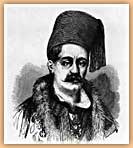
The most important factor in the formation of the political policy of the Greek state throughout the whole of the 19th century was the Megali Idea, the Great Idea. Sometimes as a central reference point and at others as a condition of legitimation of some policy, the Great Idea permeated all social and political controversies. Moreover, its registration in the political vocabulary dates back to 1844, when Ioannis Kolettis invoked its unifying dimension in the framework of the dispute between autochthons and heterochthons.
Thus, the extra-Helladic perspective of the Greek state became a basic parameter not only in the exercise of foreign policy but in the entire political life of the country. The discrepancy between the direct application of an expansionist policy and the need for an economic and administrative reorganization which would render the expansion of the Greek kingdom feasible became the main focus of political controversy after the Crimean War, and particularly in the last quarter of the 19th century. This was the period when political life was marked by virulent antagonism between Charilaos Trikoupis and Theodoros Diligiannis, politicians who - always in the name of the fulfilment of the Great Idea - represented the two different perspectives of the Greek state.
|
 |


