 |

The great importance of poetry in the intellectual life of the young Greek state is indicated by the number and diversity of the poetry competitions.
Indeed, at the beginning of the 1850s, Amvrosios Rallis, a wealthy merchant in Trieste, suggested and financed the institution of the Ralleios poetry competition, the organization of which was undertaken by the University of Athens. One of the terms of the statute for the awarding of a prize was that the poem be written in katharevousa. This regulation served to inhibit the production of poems in demotic, while the whole process promoted the style and the thematic matter of the First Athenian School.
From 1862, the Heptanesian Ioannis Voutsinaios undertook responsibility for the competition and the written prohibition of the demotic language was abolished. The final year of the Voutsinaios competition was 1877, a little before the poets of 1880 appeared.
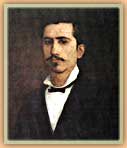
Later, the Philadelpheios competition began, in which the evaluation criteria had been considerably altered. The honouring of Kostas Krystallis (1868-1894) for his work Agrotika (Agricultural) in 1890 and Tragoudistis tou choriou kai tis stanis (Singer of the village and sheep-fold), in 1892 were characteristic.
In the poetry of Krystallis, beyond the use of demotic, the aspiration after an agricultural ideal dominates, in which the manners and customs of the village constitute a source of inspiration.
Ethography, folklore quests and communalism constitute the main parameters of a trend which appeared in a dynamic way in Greek society towards the end of the 19th century. In principle, this trend constitutes a reaction against the modernization of the social structures and the Europization of attitudes, postulating the return to an idealized rural past.
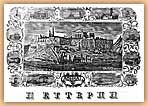
The literary periodicals which circulated in Athens in the 19th century constituted one of the main fields of discussion and dispute for spiritual and ideological themes at that time. Through the pages of Pandora (1850-1872), Ephterpi (1850-1855) and Estia (1876-1895), Parnassos (1877-1895) and other periodicals which were issued then, poems and prose writings in series, book criticism and texts appeared which put in context the major literary developments. A significant step for the presentation of the first representatives of the New Athenian School were also the satirical publications Rampagas and Mi chanesai which were published by Kleanthis Triantaphyllos (1850-1889) and Vlasis Gavriilidis (1848-1920), the later publisher of the journal Akropolis.
At the same period, literary associations were founded following the example of the Literary Society of Constantinople. Their objectives and efforts were focused on disputes over the linguistic question or literary style, while they also aimed to spread Greek education in the region of the Ottoman East.
The Literary Society Parnassos was founded in 1865 and constituted the focus of intellectual opposition at the time not just through lectures and discussions but also through the organization of a drama competition from 1877.
On the other hand, the Syllogos pros diadosin ton ellinikon grammaton
(Association for the diffusion of Greek letters)
(1869) promoted the practice of educational and cultural influence on the Greeks of the Diaspora as another version of the realization of the irredentist visions and the 'Great Idea', a version which functioned in tandem with the relevant political and military objectives.
|
 |


