|
|
The Turks took revenge on Greeks regardless of their participation in the rebellion of 1770. To this end, they employed islamized Albanian troops who cooperated with the Ottoman authorities. Throngs of Turko-Albanians launched an attack against the Greek regions. Crossing Epirus and the Pelopponese, they ravaged all that came in their way. Within nine years, the Pelopponese, Thessaly and other Greek regions were evacuated due to continuous attacks. The Mani and the Aegean islands were the sole exceptions, thanks to the amnesty granted by Xasan Beis. Rajas were in an inferior position given the fact that they had turned over their weapons and having suffered severe crop reduction as a result of the heavy winters (1774-1775).
|
|
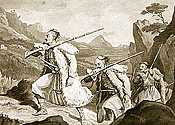
Albanians pursue an enemy
in the mountains of Greece, 1820
|
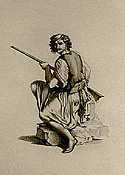
Armed man from Mani, 1811
|
|
The rebellion of 1770 brought about significant demographic changes. All Greeks who had not suffered imprisonment formed gangs, whereas many Epirotes, Thessalians and Macedonians recanted their belief. The Albanians fulfilled their duties in every respect; they forced the Turks to give up their profits from taxation, but as a result the tax farmers suffered income losses. The Turks living in the Pelopponese addressed their complains to the Porte and an order was issued; however, it was disregarded until 1779 when the Xasan Mantaloglou arrived in the Pelopponese. He requested assistance from the local thieves in return for an amnesty.
|
|
|
