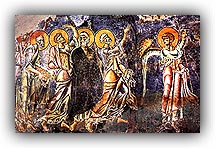
 uniformity of expression evident throughout Byzantium.
 The spread of a common style in monuments of southern Greece, western Macedonia, Cyprus, Patmos and distant Russia, justifies the name 'Komnenean style' and indicates that the artistic language of this period was formed in a centre which could be none other than Constantinople.
Despite this overall uniformity of style, three different trends reveal the variety of expressive means available at the end of the century. The so-called dynamic style featured exaggeratedly tall, emaciated figures, dramatic folds of drapery, lively gesticulations and above all a heightened sense of drama and human passion.
The second trend, on the other hand, indicates delicacy, love of beauty and a highly decorative quality, expressed in elegant figures with graceful and expressive faces, as well as in gently-folding drapery. This trend has been called 'Byzantine rococo' or 'art nouveau' or 'elegant style'.
Finally, the classicalal trend is characterized by the harmony and symmetry of the compositions as well as by the monumental depiction of the figures.