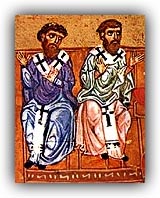
 regulated the conduct of the clergy, and matters of belief. The 'In Trullo' or Fifth-Sixth Council, well-known for its canons, was convened in the years of
Justinian II
(691-692) and dealt exclusively with matters of discipline. The aim of the synod was to cover the gaps left in canon law by the previous Fifth (553)and Sixth Ecumenical Councils.
regulated the conduct of the clergy, and matters of belief. The 'In Trullo' or Fifth-Sixth Council, well-known for its canons, was convened in the years of
Justinian II
(691-692) and dealt exclusively with matters of discipline. The aim of the synod was to cover the gaps left in canon law by the previous Fifth (553)and Sixth Ecumenical Councils. This collection of canons was divided into four parts:
a) canons ratifying the doctrinal decisions of the first six ecumenical councils along with the teachings of the Fathers of the Church
b) canons specifying the obligations of the ministerial clergy
c) canons referring to monks and
d) canons referring to the secular clergy. The influence of these canons was extensive, as can be seen by the annotations of Balsamon, Zonaras and Aristenos, the three great ecclesiastical jurists of the 12th century.