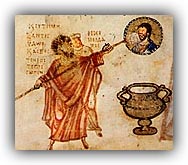
 of the Byzantine clergy and people reacted against this, as did the Church of Rome. The pope tried to take advantage of the occasion in order to be released from tax obligations due to the eastern state. Leo punished the pope by depriving him of his jurisdiction over the Illyrian Church (Southern Italy, Sicily and Greece) and subsuming it under the jurisdiction of the Patriarchate of Constantinople.
 Fanaticism and conflict were dominant in this phase of Iconoclasm. Leo΄s successor, Constantine V, launched a policy of persecution towards monks. Furthermore, by means of a council that took place in the palace of Hieria in 754, he condemned not only the worship of icons but the icons themselves. In his days
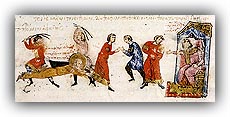 the discussions regarding icons took on doctrinal significance, since the depiction of Christ was related to the dogma of the Holy Incarnation. In these theological discussions the emperor himself frequently intervened. His iconoclastic beliefs were shared also by his son and successor,
Leo IV. His early death, however, did not allow him to express his iconoclastic inclinations to the full. His wife
Irene
assumed power in 780 as guardian of her son
Constantine VI. She
turned in favour of the iconodules and with the Seventh Ecumenical Council she convened in Nicaea in 787, she restored icons putting an end to the first phase of Iconoclasm.
the discussions regarding icons took on doctrinal significance, since the depiction of Christ was related to the dogma of the Holy Incarnation. In these theological discussions the emperor himself frequently intervened. His iconoclastic beliefs were shared also by his son and successor,
Leo IV. His early death, however, did not allow him to express his iconoclastic inclinations to the full. His wife
Irene
assumed power in 780 as guardian of her son
Constantine VI. She
turned in favour of the iconodules and with the Seventh Ecumenical Council she convened in Nicaea in 787, she restored icons putting an end to the first phase of Iconoclasm.