|
|
|
 |
|
The citizens of Constantinople and other large cities such as Antioch, Alexandria, Ephesus, Miletos, Priene, Jerusalem and Nea Anchialos,
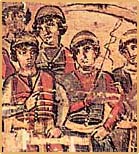 were
organized into demoi (factions). It is not known whether the whole or only a part of the
population (and how many) were so organized. Demoi were not civic
bodies, although the demarch , the person in charge of the demoi of
Constantinople, was appointed by the emperor. He was in charge of managers
who decided and acted according to the broader political, social and religious
inclinations of the demos they represented. Initially demoi were
sports unions responsible for organizing horse races and other events at the
hippodrome. Yet, over the course of time, they acquired political powers thanks to their
organization, the fanaticism of their followers and the popularity they enjoyed with
broader sections of the population. Precisely because they were
the only organized popular groups, demoi undertook other responsibilities, either through their
own initiative or by official demand. Such responsibilites included helping with the organization
of the city defense in times of emergency. were
organized into demoi (factions). It is not known whether the whole or only a part of the
population (and how many) were so organized. Demoi were not civic
bodies, although the demarch , the person in charge of the demoi of
Constantinople, was appointed by the emperor. He was in charge of managers
who decided and acted according to the broader political, social and religious
inclinations of the demos they represented. Initially demoi were
sports unions responsible for organizing horse races and other events at the
hippodrome. Yet, over the course of time, they acquired political powers thanks to their
organization, the fanaticism of their followers and the popularity they enjoyed with
broader sections of the population. Precisely because they were
the only organized popular groups, demoi undertook other responsibilities, either through their
own initiative or by official demand. Such responsibilites included helping with the organization
of the city defense in times of emergency.
In Constantinople, Antioch and Alexandria, the demoi of the Greens (Paasinoi) and
the Blues (Venetoi), again, initially sporting groups, grew into
influential political entities in Early Byzantine times, especially from the
reign of Theodosios II (408-450) to the accession of Herakleios (610). The Reds (Rousioi) sided with the Greens and the Whites (Leukoi) with the Blues in
Constantinople. The demoi we know were named after the colours of the
emblems that sport unions employed in the Roman Empire.
|
|
|




