|

Attica's history in the 2nd century A.D. is bound up with the life and work of Herodes Atticus - the richest and possibly the most powerful Athenian citizen of his time. He came of one of the oldest Athenian families, with a fortune amounting to (in the lifetime of his grandfather Hipparchus) something like a hundred million sesterces. Though this fortune was sequestered by the emperor Domitian, Herodes' father Atticus contrived to get some of it back, and when he died, Herodes inherited upwards of twelve million drachmas. But given that both Atticus and his wife Vibullia Alcia gave their money without stint for the benefit of their fellow citizens, they were able to bequeathe their son a fortune half that of Hipparchus.
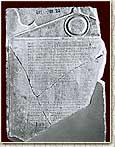 Once having come into his father's estate, Herodes declined to honour the financial agreements (fideicommissa) his father had made with various Athenian citizens, the result being that several of the latter went bankrupt. In his lifetime, the Atticus estates included much of Kephisia and Marathon.
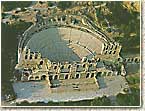
 Herodes continued the family tradition of spending lavishly on public works: this brought him so much power that eventually he was regarded as a tyrant. The construction of the Panathenaic Stadium and the Regilla Odeum were among the building projects he financed. He also shouldered the financial burden of a number of public services (litourgiai). From 170 to 174 A.D. he was exiled to Oricum in Epirus, thanks to the machinations of his political opponents.
 As this was to the economic detriment of the city of Athens, however, the matter was placed before the emperor, Marcus Aurelius. The latter, having heard both the accusations made and Herodes' plea for clemency, ruled that other persons, not Herodes, were ultimately to blame for the situation complained of; and gave his consent for Herodes to come back to Athens. His return was triumphant but short-lived, for he died in the city in 177 A.D.
|