
The main characteristic of the Seleucid kingdom, which included the largest part of Alexander's occupations in Asia, was the constant fluctuation of its territory.
Unlike the unmingled population of Macedonia -or even that of Egypt where, apart from the Greeks, the indigenous population was unified- in the kingdom of the Seleucids racially uneven populations with various cultural traditions and different social mentalities existed. Few common elements existed among the Greeks of Asia Minor, the Judaeans of Palestine, the Persians of the eastern satrapies and the Arabs of Syria. A constant habit of the Seleucids was their effort to impose their domination over to the vast state, which covered the geographical area from the west coasts of Asia Minor to India, and maintain at least a fundamental political cohesion. Besides bureaucracy and military enforcement -since the worship of the monarch was considered one of the most substantial cohesive elements of the state- an effort took place to promote the ruler cult in every possible way, although it could never be systemized as it was in the Ptolemaic kingdom.
In general, the Seleucids attempted to enforce the Greek element, mainly through the founding of cities, which were vested with some autonomy. Antioch on the Orontes river in northern Syria was typically the capital of the state, while important administrative centres were Sardis in Lydia and Seleuceia on the Tigris. The Seleucids -as every other Hellenistic ruler- appointed to the higher state officers their Macedonian friends, who constituted the Greek ruling class. At the same time, they were tolerant of the rest of the populations, who lived in the kingdom and respected their languages and religions, while from the
| introduction | Alexander | successors | kingdoms | Greece | freedom |
Note: Click on the small photo to enlarge it.
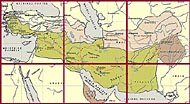
01. During

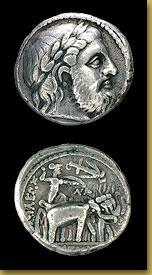
02. Silver tetradrachm of