
 For
the heroes of the Homeric poems, the accumulation of wealth was a matter of pride, distinction and
power. The prestige of a warrior depended upon the size of his storehouse but also
the splendour of the gifts he could present to his guests who were of the same social position.
The accumulated wealth, which basically consisted of reserves of cereals, storage jars
with wine or olive oil, textiles and other products of household industry,
as well as various metals either in the form of ingots
or weapons, tripods or cauldrons, were kept in a special storeroom.
For
the heroes of the Homeric poems, the accumulation of wealth was a matter of pride, distinction and
power. The prestige of a warrior depended upon the size of his storehouse but also
the splendour of the gifts he could present to his guests who were of the same social position.
The accumulated wealth, which basically consisted of reserves of cereals, storage jars
with wine or olive oil, textiles and other products of household industry,
as well as various metals either in the form of ingots
or weapons, tripods or cauldrons, were kept in a special storeroom. 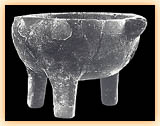 The
storage of wealth can be traced in the archaeological record through the architectural remains, the
coarse pottery, and in clay models of granaries particularly related to the storage
of fruits. One of the most important classes of coarse pots are the pithoi (large
storage jars). These have already been encountered since the Bronze Age in various
areas of mainland Greece and the islands, and served for the storage of
wine, olive oil, cereals and rain water.
The
storage of wealth can be traced in the archaeological record through the architectural remains, the
coarse pottery, and in clay models of granaries particularly related to the storage
of fruits. One of the most important classes of coarse pots are the pithoi (large
storage jars). These have already been encountered since the Bronze Age in various
areas of mainland Greece and the islands, and served for the storage of
wine, olive oil, cereals and rain water.
 One of
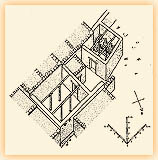
the most characteristic features of the houses of Zagora on Andros, are the
stone benches along one or more walls of a room, in many of which
rows of embedded pithoi, or holes for their reception, were found. For the
storage of cereals or water, stone vessels were used which were
found in rooms and courtyards of houses in the same settlement. In Smyrna,
remains of a circular granary were found dating to the 8th century BC.
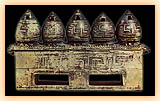
From a female burial of the mid-9th century BC, in the Areopagus
of Athens, comes a clay vessel in the form of a larnax (an elongated, narrow
chest with a lid), which is crowned with five miniature granaries in a
row. Its function seems to have been more symbolic than practical.
It probably implied that the deceased belonged to an upper social class,
which derived its wealth from agricultural production.
One of
the most characteristic features of the houses of Zagora on Andros, are the
stone benches along one or more walls of a room, in many of which
rows of embedded pithoi, or holes for their reception, were found. For the
storage of cereals or water, stone vessels were used which were
found in rooms and courtyards of houses in the same settlement. In Smyrna,
remains of a circular granary were found dating to the 8th century BC.
From a female burial of the mid-9th century BC, in the Areopagus
of Athens, comes a clay vessel in the form of a larnax (an elongated, narrow
chest with a lid), which is crowned with five miniature granaries in a
row. Its function seems to have been more symbolic than practical.
It probably implied that the deceased belonged to an upper social class,
which derived its wealth from agricultural production.