 |
||
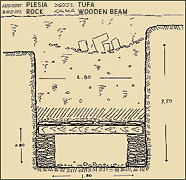
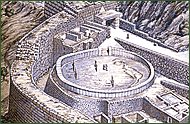
The shaft grave is the first Mycenaean grave type that appears during the Late Helladic I period (1550-1500 BC). The most typical examples of shaft graves are in the two Grave Circles of Mycenae. Grave Circles A and B which are considered as burial places of the regional chiefs. Grave Circle B which is situated in the southwestern side of the citadel is the oldest one since its earliest graves date to the end of the Middle Helladic period. The later Grave Circle A was initially out of the citadel but later enclosed within its wall as this was extended for protection. The shaft graves constitute probably an evolution of the Middle Helladic cist grave, a type which continues in the Late Helladic period as well. These are deep pits of a parallelogrammic shape and were destined for more than one graves, in contradiction to the cist graves. Their roof was made of slabs placed on wooden beams and was covered with clay while its great distance from the ground created a small rectangular chamber. The area above the roof, the latter being usually the surface of the ground, was covered with earth. On the earth a stone stele was implanted.. The dead of the shaft graves were placed in a supine position, their legs slightly bent, maybe in coffins as the remains of wood indicate. They were dressed with valuable costumes and adorned with jewellery and precious metals and rare stones. Around them were sumptuous grave goods, weapons, ceramic and metal vases and objects of everyday use which reveal the high social status of the dead if not their royalty. Among the grave goods are some of the most fabulous examples of Mycenaean art as well as imported objects or domestic ones made of imported materials, indications of the international contacts of the Mycenaeans. The grave goods of the shaft graves show the refined taste of the Mycenaean leaders which seem to have been collectors of the most elegant and masterly articles of that period. Moreover, the grave goods reflect the personality of the monarchs which were no more attached to the Helladic customs but had adopted the tastes, customs and beliefs of other people. Thus, a skeleton, probably of a woman which has traces of embalmment -despite the isolated example- brings the burial customs of the Mycenaeans close to the beliefs of the Egyptians as far as life after death is concerned. |
 |
|
|
|
Mycenae, Grave Circle B.
Section of a shaft grave. |
|
 |
||
|
Reconstruction of
the Grave Circle A of Mycenae. |
||