
The material remains of the Bronze Age, such as the settlement and funerary architecture, pottery, frescoes, tools, seals, figurines, jewellery, etc. reveal the technological achievements and the artistic temperament of their creators. Moreover, elements of the natural environment, the sectors of economy and the social composition of the insular communities in the various periods are deciphered. The artifacts reflect the restless and creative mind of the islanders, their freedom of thought and the imagination which is kindled by the unknown world opening beyond the restricted geographic limits of the islands, but also the lifestyle simplicity of the islanders.
The exploitation of the mines on the Cyclades and the development of bronze metallurgy in the northeastern Aegean islands reinforce the quality and typology of the tool manufacture. This has a direct effect on the agricultural and artisanship production (marble sculpture, navigation, etc.) and on the trading activities.
Ceramic production, in both its north Aegean and Cycladic variations, is characterized of originality and a great variety of shapes and decorations which reflect the economic and social demands of the insular societies but also the sporadic effect of the pottery of Asia Minor (Early), Middle Minoan Crete and Mycenaean mainland Greece (Late Bronze Age). The use of the potter's wheel which occurs from about the middle of the 3rd millenium constitutes a landmark in Aegean pottery.
The painted decoration of ceramic vases which appears in the Early Cycladic II and III periods is very important for the art of the prehistoric Aegean. The colours and themes (animal-life and plant-life) are developed during the Middle Cycladic period and painting reaches its peak in the Late Cycladic I period with the landscape paintings and the historical scenes of the frescoes of Akrotiri on Thera.
The marble-sculpture of the Early Cycladic II period, products of which are the variform vases and marble figurines that are traded as "prestige goods" in the entire Aegean possess a distinguished position in the Bronze Age insular art. The anthropocentric character of the Cycladic art as well as the quest of the monumental element which is expressed in the first large plastic artifacts are manifestly reflected in the figurines.
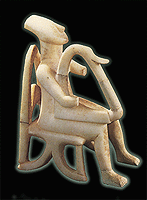
Early Cycladic II.
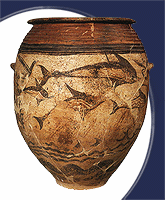
End of Middle Cycladic period.