 Το
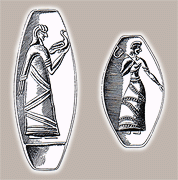
Their garment was a long cloth with fringed ends, wrapped several times
around the body. This cloth was worn over a dress with short sleeves.
It is likely that these cloths were tied at different points into the sacred knots
known from the religious iconography of the Middle East as well.
In the Aegean region, fringe-ended clothes were worn by men and women, but the
one-piece cloths wrapped around the body were worn exclusively by men.
Το
Their garment was a long cloth with fringed ends, wrapped several times
around the body. This cloth was worn over a dress with short sleeves.
It is likely that these cloths were tied at different points into the sacred knots
known from the religious iconography of the Middle East as well.
In the Aegean region, fringe-ended clothes were worn by men and women, but the
one-piece cloths wrapped around the body were worn exclusively by men.
Two other iconographic versions of such priests
appear in the seal carving art. On one of them, the priest is holding an arrow and on
the other an axe. Sometimes they are holding the so-called Syrian ritual axes which -
like the fringed dress - probably come from the East. These seals do not occur
during Mycenaean rule. From this period onwards, male figures in fringed
garments occur only in paintings, which indicates that Minoan priests
continued to perform their duties under Mycenaean rule.
 .
.
The priests in the Knossos fresco are wearing garments of this type. Here too the cloth was wrapped around the body in exactly the same way as the clothes on the seal representations. This image confirms that the fringed garment was worn by a specific social group and was not the dress of a ruler.