


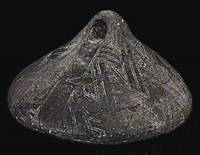
The settlement of Sitagroi (or Photolivos Ι) is situated in the plain
of Drama, on the left bank of the Angitis river. Excavations (1968-1969)
brought to light five building phases dating from the Late, the Final
Neolithic (Sitagroi Ι-ΙΙΙ) and the Early Bronze Age (Sitagroi ΙV-V). Calibrated
radiocarbon datings have moved back the Neolithic phases to the period
5500-3500 BC, while the Early Bronze Age dates between 3500-2200 BC.
The few architectural remains of the phases Ι-ΙΙΙ indicate the use
of rectangular timber-post framed houses, constructed from vertically
placed tree trunks and branches, coated in the interior and exterior
with hayclay. Food preparation constructions were found in their interior.
|
|
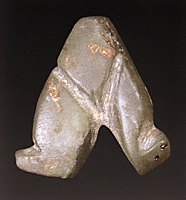
The dietary needs of the inhabiatnts were met, according to a study
of palaeobotanological and archaeozoological material, by farming, animal
husbandry and hunting (27 wild animal species). Among the activities
of the farmers at Sitagroi, weaving
of flax and wool, basketry (imprints of straw mats on a vase base),
figurine sculpture and pottery are included. Pottery production was
characterized by vases with graphite-painted decoration, particularly
disseminated in eastern Macedonia and the southeastern Balkans. Black
painted decoration on red vases, as well as incised ware, were also
particularly popular. Painted decoration was also applied to anthropomorphic
and zoomorphic figurines.
In phase ΙΙΙ (4600-3500 BC) beads of copper (1) and gold (1), two pins,
-one with a spiral head-, and a clay crucible for metal melting have
been dated. These finds are some of the first indications of the practice
of metalworking
in the area.
|