 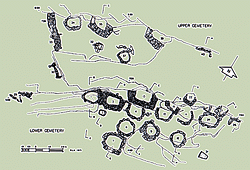
During the Final Neolithic the burial customs, known from previous phases of the Neolithic, continued: the internment of the dead in simple pits, in a contracted (foetal) or flexed position, cremations and the collecting of bones. In addition, at Alepochori in Laconia, bones of an infant were discovered in a vase, placed inside a larger pithoid vase. In Alepotrypa Cave on Diros, the custom of a group collection of bones has been repeatedly observed, without the lower jaw, in various parts of the cave (e.g. "ossuary" of 19 skulls) both during the Late, and Final Neolithic as well. Also in niches of the cave the custom of cremating children was practised, and to whom many vases with painted designs, smashed during the cremation, were offered. The exceptional quality and abundance of these painted vases must be linked either to the very young age at which death took place or to the social class of the children. The social differentiation taking place in burials during the last phases of the Neolithic, is reflected in the cemeteries excavated at Kephala on Kea, Tharrounia on Euboea, and Yiali in the Dodecanese. They consisted of simple or multiple burials, in the established contracted (foetal) position, in rectangular or oval pits. The walls of the pits were coated with stones (Kephala, Tharrounia) and covered with slats. The offerings to the dead included vases and more rarely figurines (Kephala on Kea). Finally, a unique find concerning burial customs of the Neolithic was a chamber tomb discovered in the area of the Ancient Agora of Athens. It consisted of a ditch 3 metres long and 79-90 centimetres wide which led to a carved chamber containing the burial of a man in a contracted position, to whom two vases had been offered. This grave is an exceptional construction for the Neolithic Period, and probably reflects the social status of the dead. What is more, it is the oldest example of a chamber tomb in Greece. |