Religious painting, which always played an important role
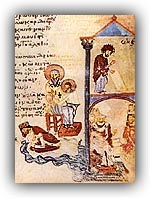 in the public life of Byzantium, passed through three successive phases between 610 and 867: pre-Iconoclasm (610-726), the period of Iconoclasm (726-843), and post-Iconoclasm (843-867).
The iconoclastic dispute with its insistence on non-iconic expression played a decisive role in the development of Byzantine art. It began in 726 under Leo III; in the reign of Constantine V (741-775) it intensified, while its first phase was completed with the Seventh Ecumenical Council of 787 in the days of Irene and Constantine VI. With Leo V the Armenian, however, the sharp opposition regarding the adoration of the icons went on to be finally resolved with the restoration of the icons by Theodora in 843.
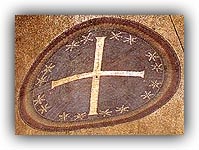
The main conceptions of the iconographic debate were expressed in concrete form in the scenes decorating the apse of the church. From the 6th century the Virgin Mary was depicted in this part of the church, reflecting the doctrine of Incarnation, and continued to consistute a central point of the iconographic programme even after 843. In the period of Iconoclasm, the figure of the Virgin Mary was replaced by the cross, a theme of exquisite symbolic significance. 7th century medals also show a symbolic expression of contemporary doctrinal arguments in their depiction of Christ at different ages of his life, thus representing his dual nature.
|